Thursday, October 6, 2016

The Pinball Wizard of Krakow


He's a pinball wizard
There has to be a twist
A pinball wizard's
Got such a supple wrist
From Pinball Wizard by Pete Townshend


Rain has been falling steadily in Krakow for the last three days, and the temperature has continued to drop.  We’ve been able to stay fairly active, but cabin fever began creeping into our apartment in the sky, and we needed an antidote.  The kids managed to do a good bit of school work done while Deena and I searched for a restaurant within reasonable walking distance. We discovered Hoang-Hai, a Vietnamese establishment with good reviews —why not?  With a predicted high temperature of 41 degrees accompanied by rain, we got in some layering practice to see if our theories on fighting the onset of an eastern European autumn would hold up, and we struck out around 2:00.


Even with the raw conditions, it felt good to be outside, and a stiff searching wind cleared the cobwebs from our minds seconds from leaving our building.  I always assume that no matter where we roam, the locals will always have the lowdown on tricks to survive the weather conditions in their native lands, and I was eager to learn a few lessons by observing some Krakowiakas in the cold.  To my dismay, most of the people we passed on the sidewalk were in a big hurry because they were woefully underdressed and freezing.  Some had umbrellas, but most did not, and their soaking cloth coats hung uselessly from their pneumonia-bound frames.  I felt that I needed to gather everyone around and share my vast knowledge of synthetic layering and the importance of a waterproof shell, but I decided to leave them to their own devices since the desire for fashion relevance was the driving factor on display all around.


Fifteen minutes later, the warm, garlic-washed air from the Hoang-Hai restaurant wrapped around us as we stepped in from the cold and claimed a table at the back near the kitchen.  The restaurant was deep and narrow with a slender aisle running between four-person tables on either side of two dining rooms.  The floor was covered with dark green commercial carpeting, and small slivers of egg-yolk yellow painted walls were peeking out between decorations of calendars and dragon embossed fans that looked more Chinese than Vietnamese.  For a while, we were the only customers there, but the tables gradually filled up as we studied menus written in Polish and English that extolled the attributes of dishes that seemed to combine several Asian cultures.  We managed to give our order to the Polish waitress just before the place filled to capacity, and she took it back to the kitchen where the Polish cook began stir-frying our meal.  We wondered how many more multicultural layers would be visible before the end of our late afternoon luncheon.  

The food arrived quickly—three big plates heaped with beef and noodles, sweet and sour chicken, Thai-spiced pork, and a generous bowl of savory wonton soup.  Each dish was accompanied by a sticky ball of steamed rice and the Polish version of salad, which is a coarsely chopped slaw of lettuce, cabbage, and carrots drizzled with tangy vinegar.  We dived in and shared everything. When we pushed back from empty plates, we concurred that we had made the right choice for a rainy day meal.  The Asian diners at the table next to us offered sounds of praise as well, which we felt validated our assessment of the food’s quality.  The entire meal with drinks and tip set us back a paltry seventeen dollars, and we agreed that Hoang-Hai was the best Vietnamese, Chinese, Thai, Polish, English restaurant in the world.


We layered up again and hit the streets bound for our next rainy day destination, the Interaktywne Muzeum Flipperów or the Krakow Pinball Museum, my preferred pronunciation.  Growing up in the seventies and early eighties, I loved playing pinball, and even with the advent of more sophisticated video games during this period, I favored playing the silver ball.  I remember riding my bike through the woods to the arcade behind the local shopping center on fall and winter Saturday afternoons with a pocket full of money earned from my paper route.  I was obsessed with figuring out the nuances of the machines amidst the lights and bells and precarious control of the ball, attempting all the while to rack up enough points for a free game and to extend my playing time.  The satisfying pop of the machine sounding like the smack of a bird flying into the glass at high velocity signaled a free game and at the same time, alerted everyone in the arcade to my status as a pinball wizard. I would emerge hours later, overstimulated and broke but already looking forward to next Saturday’s pinball session.  


The Krakow Pinball Museum was located off a main boulevard, through an alley, and down several several flights of stairs.  The front door opened into a central chamber where the attendant held forth behind an antique oak bar.  The girls decided they didn’t want to play, so Joseph and I bellied up to the bar and exchanged fifteen dollars for bracelets entitling us to unlimited play until 11:00 PM.  The museum housed about one hundred games dating back from my wonder years up to the late nineties, and they were lined around two large cavelike rooms with curved ceilings and walls made from bricks exposed by crumbling plaster.  The only light was the collective radiance from the machines creating a warm, inviting glow.  


For the next few hours, I felt like a teenager while I reveled in the games of my youth and experienced machines that were issued after I became harnessed with responsibilities and worldly cares.  I played Dirty Harry, Comet, Fun House, Diner, Dracula, Cyclone, Star Trek, Elvira and the Party Monsters, Corvette, and many more.  I saw Joseph a few times as we met while crossing the rooms, and it looked like he was having fun as well.  The girls were patient and went out shopping for a while and then returned with a boxful of treats from the nearby bakery which I wolfed down quickly so I could return to my playground.  Even though the machines were set for complimentary play, they still signaled loudly when sufficient points were scored for free games, and the frequent popping of my machines let the whole museum know that the Pinball Wizard of Krakow was in town.  What a fun, whimsical way to spend a rainy afternoon in eastern Europe.  I mentioned to Deena that I might like to purchase a pinball machine when we get back home, and while I was perturbed by her lack of enthusiasm, I still began picturing how Elvira and the Party Monsters would look lighting up our bonus-room alcove.


Tuesday, October 4, 2016

Auschwitz


The heart is deceitful above all things, and desperately wicked: who can know it?
                                                                                                        Jeremiah 17:9


The weather forecast for the coming week looked wet and much cooler, so we determined to spend our last day of sunshine walking around outdoors on this Sunday.  Our first stroll took us to the door of Krakow City Church at 11:00 where young greeters there ushered us in and made us feel right at home.  A Google search revealed several churches within walking distance from The Eyrie, and this one was the closest, but we weren’t sure if they provided English translation.  Thankfully, the back two rows were reserved for English speakers, and we joined in with the congregation singing wonderful praise songs with lyrics in Polish and English.  The worship band was tight, and the guy playing the electric guitar had some righteous licks—turns out he was the pastor of the church!  Later in the service, he preached a stirring sermon, which was translated for us by a nice young lady with strong skills in English.  


We had signed up for a walking tour of the Jewish Quarter at 2:00, so we quickly walked home after church, ate lunch, and headed back out to meet the group.  Because our apartment is located right on the edge of the Jewish Quarter, we didn’t have far to walk to the designated meeting spot, the oldest synagogue in Krakow.  Once again, we had an excellent guide and an affable group, and we spent an educational two hours walking the streets and learning about Jewish history in this area.  Our tour wrapped up on the edge of the former ghetto established by the Nazis in 1941 as they began their program of racial cleansing in Poland.  The Jewish ghetto became a place of suffering and uncertainty, and most of the occupants were eventually deported to their deaths in concentration camps, including Auschwitz.


The rains came heavy in the night as prophesied, and I cooked breakfast the next morning by the light of the range hood while the rest of the crew slept as long as they could.  Over the weekend Deena booked a tour of Auschwitz from a recommendation by our host, and the driver was due to pick us up at 10:00.  We moved about the apartment quietly, everyone contemplating the infamous place we were about to visit. We dressed in layers to combat the wind and rain and temperatures that were predicted to stay in the 50s.  Our driver was on time, and we were off to visit Auschwitz on Rosh Hashanah in a van manufactured by Mercedes Benz—I don’t use the word “surreal” often, but I think it applied today.  


My family shared the van with an older couple from Australia, and Deena and the kids exchanged travel stories with them in the back seat while I watched the Polish countryside scroll by from the passenger seat.  The sky was light grey with sweeping darker patches carrying misty rain that required the hypnotizing tempo of the intermittent windshield wipers.  The landscape rolled out from both sides of the road looking like giant furrows in a field alternating between rows of spent corn and deep green grassy spaces lined with evergreen woodlots.  There was the occasional stand of hardwoods, primarily maples with leaves already tinged with light yellow tones, surrounded by thick ground cover shot through with deep orange and reddish-purple.


I shook my head as my thoughts turned to people traveling in the same direction riding in packed boxcars seventy-three years ago, starving and frantically wondering about the location of their loved ones.  They could have cared less about the colors of the countryside or the pattern of the rain as they existed on the false hope of “something better” promised by the Nazis.  Sometimes guilt wracks me when I consider that I’ve walked the earth free from oppression for fifty years, and I struggle with feeling that I need to apologize for my station in life.  


We pulled into the main gate of Auschwitz at 11:30 AM in the steady rain, parked quickly, and walked to the ticketing area close by.  While our driver went off to secure our passes, we waited in a crush of tour groups lined up for the same purpose.  I mentioned the crowd to our driver when he returned, and he said that during the summer months, there are traffic jams caused by an armada of coaches and that huge crowds wait in long lines for hours in the heat to buy tickets and gain access to a tour.  We were placed with a group of about thirty people rather quickly, and our guide for the next three hours, Camila, introduced herself and showed us how to work our headsets and receivers.  Camila was in her mid-twenties, tall, confident, and dressed in black slacks and a stylish black leather jacket.  She carried a small pink umbrella to combat the rain, and now that I think about, I don’t remember her opening it a single time.


The skies were the color of concrete, and the steady mist continued as we set off down the main road that had been turned to thick slippery mud by twenty-four hours of rain.  We walked up to a black iron gate with the words "ARBEIT MACHT FREI" welded into the curving top of the passage—and we crossed into the horror of Auschwitz.  Standing in front of this gate during the height of the Holocaust, I am certain that if one were granted a glimpse into the spiritual realm, a great bat-winged demon would have been visible gripping the iron with black leathery claws, uttering a croaking cry of triumph.  Perhaps it’s there gloating today, still pleased with this bleak factory of death after a lifetime has passed since the camp was liberated.  

Auschwitz

Over three years during World War II, at least 1,100,000 prisoners, mostly Jews, were systematically executed in the original Auschwitz camp and Birkenau, which was quickly constructed close by for killing large numbers of people more efficiently.  I am convinced that the planning, administration, and lack of conscience necessary to facilitate mass killing with this level of proficiency could have only been made possible by humans motivated by demonic custodians.  After the war ended, many Nazi officials testified that they were just following orders, but it's obvious to the rest of the world that everyone involved with running Auschwitz and all the other deaths camps knew exactly what he or she was doing.


Blocks in Auschwitz


Camila solemnly led us in and out of brick buildings as she described their purpose and the acts carried out within the confines of the walls.  We saw the buildings where women were sterilized systematically and where Josef Mengele performed his gruesome experiments.  We walked along the halls of barracks, the walls covered with thousands of pictures of inmates with admittance and death documentation taken by the Nazis until they deemed the process too cumbersome.  We walked the 80-foot length of a glassed-in corridor containing a heap of human hair the size of a sand dune harvested from gassed prisoners for the purpose of making socks for the German army.  All the while, we crossed the compound in the rain walking with measured steps on barbed wire lined causeways becoming deep with yellow brown mud.  After two hours, we finished our tour of the main compound by descending into one of the gas chambers.  It was very dark in the room, but daylight was visible from the vents where the SS guards released the Zyklon B pellets onto prisoners, who in that horrific moment realized they weren’t in there to take showers.  The end of the gas chamber opened directly into the crematorium with its original ovens still in place, the surrounding brick supports reconstructed from the original architectural drawings.  That’s right, people purposely sat down at their drafting boards and drew plans for the construction of a place to burn the bodies of those classified as inferior.


Gas Chamber in Auschwitz

We we given a short break before making the three-kilometer drive to Birkenau, and we went to a snack shop to order a couple of sandwiches—we weren’t really hungry, but the primal act of eating helped keep our minds from running away.  Joseph thought it was odd to have cafes located in a former death camp, and it did seem a bit strange, but basic services like food and beverage and clean toilet facilities are a necessity in a national museum that draws close to two million visitors every year.  

Birkenau


Our one-hour tour of Birkenau also took place under grey skies, but thankfully the rain held off as Camila led us along the entire length of the camp beside the rail line that carried boxcars full of prisoners to the selection area.  Those that were considered fit to work, mostly men,  were led to barracks while those judged to be unfit, mostly women and children under twelve, were sent directly to the gas chambers under the pretense of showering and delousing in order to prevent mass panic.  At the back of the camp in front of the ruins of the crematoriums, Camila gathered the group closely and asked us to look around at the nearby trees and the grass covered common areas.  She said that when the camp was operating during the war, there was nothing green and that it was a horrible place with mud and filth everywhere.  She asked if we had ever burned our hair by accident or singed the hair on our arms and inquired if we remembered the smell of the burning hair.  She said that Birkenau smelled constantly of burning hair, and the air was filled with thick, swirling ashes from the bodies burned in the crematoriums.

Birkenau Selection Area

Crematorium Ruins

Barracks in Birkenau

At the end of the hour, we walked through one of the remaining brick barracks and saw the original three-tiered bunks on which the prisoners slept six or seven to a platform. The building was dark, bleak, and miserable, and we were worn out in every aspect by this point in the day.  We stood with Camila on the muddy road in front of Birkenau, and she reminded us that the people killed in these camps had no opportunity to enjoy their lives and that they were cut short by evil deeds, but we have the potential to enjoy our lives free from persecution.  She wished us well and encouraged us to live purposely remembering the things we saw at Auschwitz.


After reading about Nazi death camps for years, visiting one was even more overwhelming than I thought it would be.  Over dinner we discussed the parts of the tour that left the biggest impressions on us.  I’m not going to write anymore about those things because I don’t have the stomach for it anymore.  I lay awake in bed last night wondering if we did the right thing by taking our kids to a place that will probably haunt their dreams for the rest of their lives.  I decided that if the memory of Auschwitz gives them the strength to stand up for even one person that needs help and lacks a voice in this world, then it was worth it.  Please God, let it be so.


Monday, October 3, 2016

Packing for a Trip Around the World

While we’re staying in places for longer periods of time, I’m hoping to use the extra hours to write about some of the many details surrounding a trip around the world.  One of the questions I heard most from people once they had found out about our excursion was, “How in the world are you going to pack for something like that?”  The ratio between the time it took to create a packing list and the amount of items we ended up taking is very uneven, but so far, the research has paid off.  My family has invested a lot of time over the years camping, backpacking, and taking major trips to national parks and other areas of interest across the fruited plain.  Through all those trips, one of the major themes has been packing light so that we can move quickly and not be burdened with excess baggage full of items that never get used.  


People tend to operate under the pretense that it’s better to have something and not need it than to need something and not have it.  Fear of the unknown and the desire to recreate the lifestyle at home while on the road drives the packing process for many. Thinking like that can lead to misery and disorganization on the trail and on the road, and when it comes down to it, one can get by comfortably on an adventure with very little in tow.  With all that said, here’s my packing list for this trip with a brief explanation of the thought process behind the inclusion of the items:


Luggage - Osprey Farpoint 40.  I'm a big fan of the Osprey company because their products are well designed and made to last.  I’ve used an Osprey Aether 70-liter internal-frame pack for many backpacking excursions.  The Farpoint 40 liter bag conforms to all airline carry-on restrictions so it doesn’t have to be checked—saving a lot of time and money.  The bag can be carried as a suitcase or converted to a backpack with shoulder straps, hip straps, chest strap, and load lifters.  It has straps inside for compressing clothing and outside for compressing the whole bag once it’s packed.  There is an interior sleeve for a laptop as well as easy-to-access pockets for documents and chargers—I love it.  Joseph and Deveny are carrying Farpoint 40s as well, while Deena is packing one of our trusty carry-on suitcases also with a 40-liter capacity.


Base layer - synthetic long underwear—top and bottom can be used for sleeping or layering in colder temperatures.


Underwear - three pairs of synthetic boxer briefs made by Uniqlo—lightweight, breathable, and the silkiest, most comfortable underwear I’ve ever worn.


Socks - three pairs of Nike dri-fit crew socks.  These socks are a synthetic/cotton blend, which makes them a little more slow-drying than the rest of my clothing, but they are the most comfortable socks in the world, and since they’re black, they can used for dress or casual occasions.


Short-sleeved shirts - three synthetic t-shirts, blue, gray, and red, purchased at Walmart for five dollars each.


Long-sleeved shirt - my trusty slate blue synthetic Eddie Bauer hiking shirt purchased on Ebay for fifteen bucks.


Pants - synthetic khaki zip-off hiking pants, can be used for dress or casual wear.  I started this trip with two pairs of pants, but threw the older one away after determining it was unnecessary.


Shorts - two pairs synthetic khaki shorts by Columbia, another one of my favorite manufacturers.  One pair has a mesh liner so it can double as a bathing suit.


Shoes - one pair of low-rise Eddie Bauer trail hikers, thirty dollars on Ebay, dress or casual, very comfortable walking shoes.


Outerwear - one lightweight raincoat and a down jacket that packs to the size of a grapefruit.  Synthetic stocking cap and a lightweight pair of gloves.


Microfiber camp towel - we don’t have room to pack fluffy cotton towels, so each of us have one of these microfiber towels in our bags.  They pack down to the size of of a handkerchief, and while not as luxurious as a full sized towel, they get the job done.  So far, we’ve stayed in two places where we needed them, and we lived to tell the tale.


Toiletries - I have a small toiletry bag in which I pack a toothbrush, dental floss, razor, and fifteen spare razor blades which should easily last the remainder of the trip.


That’s it for the clothing and individual toiletries in my bag—three days worth of clothes with pants and a long-sleeved shirt to wear for church and cooler weather.  


Now, I’m sure you’re wondering how we’ve been able to do laundry every three days to maintain an optimum level of freshness.  Here’s a little secret:  one can wear the same clothes for multiple days and not die—hard to believe, but it’s true.  We do laundry once a week and sometimes wash items in the sink.  There are no dryers; so we hang everything on racks or a length of paracord to dry overnight, and because everything is synthetic, drying within a two-three hour period is guaranteed.  Synthetic clothing is very lightweight, comfortable, breathable, packs down very small with no wrinkling, and can be layered easily for cold weather.  The rest of my family members are packing in a similar fashion, and the girls have a few additional items particular to females.  Joseph and I have a bit of extra room in our bags used to carry crew gear which is described below:


Bible - one shouldn’t leave home without one’s sword.


Nook - small tablet which takes the place of many heavy books, and my special edition Lord of the Rings set is stored in the memory.  We might have been able to work out reading on the laptop, but I prefer reading on the Nook, and it takes up very little space.


Two iphones - these contain most of our travel information and contacts, and the kids claim about 99.9% possession of them.  They use them to document our trip with pictures and to keep up with their friends through about 100 social media outlets.  Given the choice between keeping their phones or keeping their clothes, they would take the phones immediately without considering the consequences of traveling unadorned.


Two textbooks - Joseph unfortunately has to lug two paperback textbooks around, but there were no American literature or American history books that we liked available in digital form.


Liquids - all of our travel-size toothpaste, deodorant, shampoo, contact solution, shaving cream,etc.  These items are broken down into four quart-sized ziploc freezer bags ready for inspection by airport security.


Two REI Flash 18 daypacks - these packs are an absolute necessity as we use them in our local travels every day and during the long hauls for carrying our liquid bags.  Due to their bright orange color, they also immediately reveal our status as tourists to the local population.


Full length Inflatable sleeping pad - the type used for backpacking, necessary for the times when we have just three beds and someone gets the floor - usually Joseph.  Packs to the size of a Nalgene bottle.


Two 32-degree-down sleeping bags - These are mummy-style bags that are lightweight, warm, and pack down to the size of a small nerf football.  It was a stretch to bring two of these, but we’ve already used them several times, and we’re glad we made room for them.


Two liter-sized Nalgene water bottles - these go with us everywhere in the daypacks and provide just the right amount of water to get through a day of sightseeing.


Three 11 inch laptop computers - the kids do schoolwork on theirs, and we do research, writing, and communication on ours.


Two small electric adapter boxes - all of our electronics are dual voltage, so there is no need for convertors, but the adapters are necessary for the different plug configurations.


Pens, paper, headlamp, clothesline, portable charger - all fits in one daypack zipper pocket


Medicines - in addition to first aid type medications such as Aleve and Tums tablets, Deena and I have a ten-month supply of our prescribed medications. They take up a lot of room, but what can we do?  All the bottles are kept in two gallon-sized ziploc freezer bags.  The method used for obtaining ten months worth of prescription medication will be included in a future blog post.


Passports and travel documents - Deena keeps these in a small shoulder bag along with flash drives and quick need items like sunglasses and chapstick.


That’s pretty much it.  Everything we’re packing fits into four carry on sized bags with the addition of a couple of small daypacks allowed by all airlines except for the diabolical EasyJet, and I’ve shown in earlier posts how we defeated them.  So far, our system is working well—we’re organized, comfortable, and unburdened by unnecessary items.  By packing light, we can get ready quickly, carry our luggage with little discomfort, and get through airports with relative ease.  We’re saving an average of 120 dollars per flight by not checking bags, and we’re already on our way to our destination while others are still waiting at baggage claim.

All my stuff and the Osprey Farppoint 40

All packed up and ready for a DEA bust

The Osprey Farpoint 40
Well-designed, comfortable,
and doesn't make my butt look big

Sunday, October 2, 2016

Poland - Krakow

I counted three nuclear power plants on the way from Prague to Krakow, and there could have been more; those were just the ones visible from the bus window.  One of them was so close to the highway that I could see color variations in the thick clots of steam churning from the top of the reactor towers.  I know we have these power plants in the US, but they’re generally hidden for our convenience and peace of mind, and activists are less likely to protest in the middle of the woods.  At least in Poland, I now have the assurance that there should be plenty of power available to fire up the hot pot and keep our phones and laptops charged to capacity.  I also noted that there was a huge water treatment plant within a few miles of the power plant closest to Krakow, so I’ll be turning out the light every time I fetch some water from the tap to see if it glows.


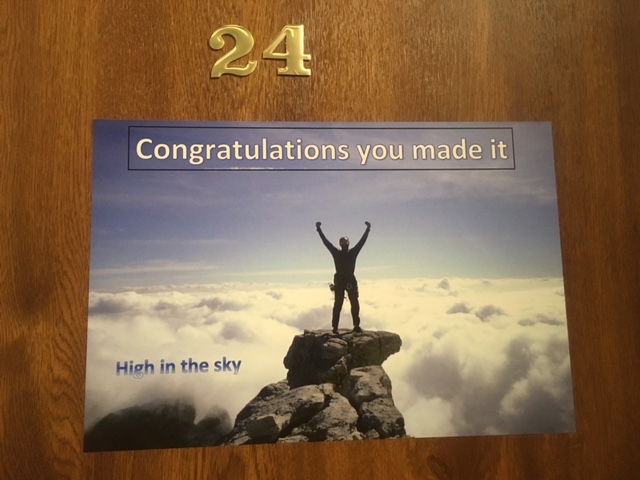
Reaching the balcony level of the Cape Hatteras lighthouse requires climbing 257 steps. The top of the south tower in the Notre Dame cathedral takes 387.  To conquer the summit of the Montmartre hill and reach the basilica of Sacre Coeur, one must climb 270 steps; there is a funicular nearby for the cardiovascularly challenged.  Reaching our apartment in Krakow, which I’ve nicknamed The Eyrie, requires climbing an entire stairwell of exactly 100 steps, and so far, I can’t find a funicular anywhere.  Our host, Andre, assures us that Krakow is a walking city and that we can reach all major attractions on foot and save lots of money by foregoing public transport—by the time we leave Krakow, we should be able to give Usain Bolt a run for his money.

The sign on our front door...seriously

The studio-style apartment consists of one large room with a sofa on a platform that converts to a double bed, while a double trundle bed pulls out from under the platform.  There is a small kitchen along the edge of the platform, and a decent sized bathroom is located off the entry hall.  The space is a little tighter than the one we had in Prague, but there is still adequate room to spread out a bit.  Our one window opens to the courtyard below, which isn’t visible from our perch, but due to extensive building renovations, we’re able to watch construction workers performing their trades on scaffolding directly across from us, and occasionally a pigeon lights on our balcony to make sure we’re ok.


We arrived at our apartment about 7:00 on Friday night hungry and "stove up" from sitting in a bus all day; so we quickly tossed our gear and ventured out into the neighborhood in search of a grocery store.  We found one a short distance away and between the four of us, we were able to find enough food for dinner and breakfast by looking at the pictures on the packaging labels.  The Polish language is very similar to the Czech language in that it's just as unintelligible with a few extra characters and symbols thrown in to keep the tourists guessing.  A few blocks and 100 steps later, we were back in the apartment in good spirits, cooking dinner, and booking a walking tour for the next day—Krakow, here we come.


There is a large fan in our apartment, and the air circulation and sound it provided served as a sedative for the whole crew last night, and we slept hard for ten hours.  I got up first and wrote for a while before making a big breakfast of eggs-in-a-basket, bananas, and yogurt.  I’m sad to report that I’m back on instant coffee—pray for me.  Our walking tour was scheduled for 2:00, so the kids had plenty of time to do some schoolwork done while Deena and I continued our research on Krakow and booked bus tickets to Budapest for later next week.  After a quick trip to the grocery store, 100 steps, and lunch we were off to the Old Market Square to meet our guide for the afternoon.  We had only about a mile to walk, but it was warm and humid, and we were panting by the time we reached the square.


For 1,100 years the Market Square has been the center of the action in the Old Town section of Krakow and today was no exception.  Outdoor cafes, which line the edges of the square, were busy with customers enjoying heaping plates of food and tall glasses of beer.  Vendors were set up in the middle of the square selling everything from psychedelic lollipops to fur coats.  We arrived with a few minutes to spare before our tour, and we enjoyed checking out the merchants’ stalls while dodging other shoppers, some carrying plates of steaming sausages and roasted potatoes.  We met our guide on the steps of Saint Mary’s Cathedral and began our walking tour promptly at 2:00 with a fairly large group of about thirty people.  We spent the next two hours checking out the highlights of the Old Town, including the medieval walls, university campus, and the venerable Wawel Castle overlooking the Vistula River. Our guide was engaging as she told us many historic facts and entertaining legends from the long history of Krakow.  My favorite story was about Pope John Paul II, and our guide passionately shared her perspective of the rise of Poland’s most influential son. She called his election as Pope a “miracle” since the all Popes for the last 455 years were Italian.  John Paul lived in Krakow for many years, and after he was elected as the Pope he returned to the city in 1979, a visit most people in Poland regard as the catalyst for the downfall of the communist government in the country.  The citizens also feel like John Paul’s rise to the papacy ended Poland's isolation from the world and finally made their country relevant in the 20th century.

The Grounds of Wawel Castle

Old Town

The Pope slept here...

We covered a lot of ground during the tour and cupcakes were certainly in order after we bid our group farewell. We enjoyed the late afternoon snack before heading back to our neighborhood.  One mile and 100 steps later, we had burned off the cupcake calories and made it back to the eyrie where we cooked a supper of Polish sausages and pierogies and talked about everything we learned about Krakow during our excellent walking tour.  Poland is another place that I grew up thinking I would never visit; yet here I am with my family ready for another day of exploring.


They tasted as good as they look


Saturday, October 1, 2016

Czeching Out

We’ve been in Prague long enough now that I’ve started to pick up on the language, and I feel I could survive here for a while with these words in my Czech vocabulary arsenal:  cigarety, alkohol, toalety, policie, telefony, and notebooky.  How’s that for an aspiring linguist?  Unfortunately, I won’t get to practice my new words since we left the grand old city of Prague this morning, and we’re now headed to Krakow, Poland, on a seven-hour PolzkiBus ride.  Unlike our last bus ride from Berlin to Prague, the coach has no movie player installed on the seats, but they do have free wifi—it just doesn’t work, and judging from the high-pitched beep I’m hearing every five minutes, the smoke detector in the toalety needs replacing.  So, we’ll settle in for a drive through the eastern European countryside and reflect on our time in the Czech Republic.


We kept our agenda for the last full day in Prague light and eased up on the kids a bit with their schoolwork since they had worked hard each day to get ahead in their studies.  Their only assignment on this day was to write a brief blog post on any aspect of our trip so far.  Deena and I used the morning to relax, read, and do a little research on our upcoming destinations.  We had a late lunch of ham and cheese baguette sandwiches, chips, and apples, and then decided to wrap up our afternoon with a relaxing visit to the Museum of Communism right off Wenceslas Square, the site of the Velvet Revolution twenty-seven years ago.  


The museum is located on the second floor of a building that houses a casino on the first floor with a McDonalds right next door—that’s enough capitalism to make Lenin sit straight up in his crystal sarcophagus.  A lady we met at church last Sunday recommend this place to us as an inexpensive, informative way to spend a couple hours, and that was a good tip—we learned a lot more about communism and the history of the Czech Republic.  A tourist brochure we read when we first arrived in Prague had a section on living with the locals, and one of the bullet points mentioned that the Czech people complain about everything all the time:  the weather, the streets, their work, each other—I had to check the front of the brochure again to make sure it didn’t say “Americans." After strolling the halls of the Museum of Communism in the former Czechoslovakia, I honestly don’t see how the Czech people have anything to complain about these days.  The communist party line was pushed to the extreme in this country, and if one didn’t tow it, one was taken away, interrogated, whupped with a big stick, and sent to a camp where there were no water slides or tacos for dinner.  Once again, I found the examples of propaganda to be the most interesting exhibits, and the posters depicting socialist realism were the creepiest I’ve seen yet.  The kids thought it was interesting and unusual to see the United States portrayed as an evil enemy in a lot of the artwork.  Our visit culminated in a viewing of the museum’s excellent short film that showed the demonstrations surrounding the Velvet Revolution through the use of actual news footage.  Parts of the film were disturbing as we watched the military and plainclothes policemen savagely beat citizens, including women and the photographers themselves, in an attempt to quell the demonstrations that would eventually lead to the government transfer of power in 1989.

It's my communist party and I'll fake smile if I want to

A Big Pile o' Communism


We enjoyed coffee and apricot sundaes in the outdoor seating area of the next door McDonalds, and after our tour of the Museum of Communism, this fun diversion seemed a miracle in a city and country that has experienced so much crushing oppression.  The global events of the last one hundred years are complex and intricately connected and difficult for even the most astute historian to follow, especially from a book.  At each point in our journey so far, Deena and I have engaged the children in a time of review to place the history of events in each city and country in context with the history of world events in the twentieth century —we try to include ice cream in this time to encourage maximum cooperation.  In the process, we’re all starting to visualize a unique timeline that doesn’t follow a straight plane, but undulates with waves of human triumphs and tragedies over the last century.  The study of history always shows these peaks and valleys like the printout from a seismograph, but the lines are closer together and more static from recent decades.


The Old Town Square drew us back one last time, and we arrived just as the astronomical clock celebrated the top of another hour in the city we’ve come to love in the last nine days.  We had plenty of time to explore the many aspects of Prague that until twenty-five years ago, were hidden from most of the world.  Our neighborhood streets became familiar and comfortable as we walked to the grocery stores and tram stops, and we eased into a low-pressure routine after many weeks of more intense travel.  The citizens here may complain a lot, but they’re well aware of the attributes of their city, as evidenced by the attention to detail and decoration of even the most recently built structures.  I will miss the scrolled frieze work and pastel facades of the buildings along the Moldau, and no matter where we roam, I’ll always look up over every door casing hoping to see a smiling stone sculpture welcoming me in the manner of Prague as I cross another threshold.