Sunday, March 12, 2017

Cambodia - Phnom Penh


During breakfast at an outdoor cafe on our first morning in the capital city, Deena observed a cryptic message displayed on the back of a passing tuk tuk which read, “Welcome to Cambodia—Good Luck.” We arrived in Phnom Penh yesterday after a five-hour odyssey on National Road 4, or the Skinny Cow Highway, as I renamed it while traveling next to a silent taxi driver with my sleeping family in the rear seat of a Lexus SUV.  On the way to Sihanoukville a few days ago, Deena counted seventy-one Lexus SUVs that passed us before she got tired of the game. We later found out that a lot of these used vehicles get shipped to Cambodia where the citizens with means snap them up as status symbols.  It’s odd to see so many of these spiffy cars speeding down dirt roads dodging chickens, dogs, and old ladies driving motor scooters with makeshift fruit stands attached as sidecars.  


The major highways in Cambodia are all two-lane roads shared by motorists driving every type of gas-powered vehicle imaginable and playing in the world’s largest game of Mario Kart, where every slow-moving participant MUST be passed immediately by any means available including the side of the road or the path of an oncoming dump truck.  Somehow it all works, and even though the drivers commit atrocious acts behind the wheel, they’re more polite than motorists in other countries, and the bad behavior is just part of the average road trip in Cambodia where Mad Max the Road Warrior would feel right at home.


I try to remain positive in my narratives about the places we’ve visited on this journey, and I do my best to remove the American filters from my out-of-date glasses before settling in for a writing session dealing with my observations on the way of life in other countries.  With that said, it’s hard for me to convey a cheerful tone when describing the bleak Cambodian countryside in which the villages have a  profound, post-apocalyptic look with every surface within fifty meters of the road covered by thick layers of red dust.  There are patches of beauty along the road as bridges span wide green rivers, and scrub-covered valleys stippled with tall palm trees spread out great distances to low ranges of hazy blue mountains.  


Everything changes upon entering the limits of the many small towns, and the highway is lined with old, crumbling buildings and merchants sitting in front of dust-covered stalls fanning themselves in the hundred degree heat.  Small shacks built with thin planking and roofed with plastic tarps border the dirt roads extending from the highway, and barefoot children play in the dirt as scrawny chickens peck around the beds of weeds growing around piles of scrap metal and broken cinder blocks.  


Gaunt, sway-backed cows with their ribs visible through thin cream-colored hides wander in and out of the road oblivious to cars and pedestrians. They show no signs of ownership such as branding, and I wondered if they’re considered community cows.  If a village citizen needs a cow for something, does he or she walk out to the road and lead one of the bovines back home then return it to the highway when finished like using a livestock library?  Beef is prominent in the Cambodian diet—is one allowed to slaughter one of these beasts once they’ve started moving more slowly than the rest of the herd?  Sadly, I’ll never know the answers to these questions as the closest source of information, our taxi driver, motors along in the smiling silence created by the language barrier—a source of constant frustration for the curious traveler.


With the stomachs of my crew back to normal function, we enjoyed a big breakfast before leaving Koh Rong Island, and the two-hour boat ride proved to be thankfully uneventful as we rode the waves back to the mainland.  The crew cooked up a big batch of potatoes that looked like fat purple carrots and distributed them among the passengers, and we were grateful for the delicious snack.  Our reserved taxi was waiting for us back at the Palm Beach booking office, and after a quick bathroom break, we loaded our gear and started the journey to Phnom Penh close to five hours away.  The driver stopped once for gas, and we took the opportunity to load up on snacks like cashews and cookies to tamp down the hunger pangs until we reached the city.


We reached the city limit about 4:00 just when rush hour was starting. We arrived at our apartment an hour later and still had plenty of time to check out Phnom Penh in all its wild glory.  Even though it’s a modern city in many aspects, the capital has been described as having the feel of a frontier town with prominent characteristics of village life firmly settled among the tall bank buildings and car dealerships.  The crowded streets are just as dusty as the surrounding highways, and I expected to see tumbleweeds blowing from the KFC across to the shop selling used engines blackened with old grease.  The thick tangles of electrical cable strung up high above the roadsides and the jumble of old restaurants and small markets reminded me of the streets of Saigon, but central Phnom Penh lacks the greenery of the Vietnamese city with bright red and gold banners touting Angkor Beer strung up anywhere a line can be secured.  


I got brief glimpses of canals as we crossed small bridges, but the water was barely visible through thick vegetation full of floating rubbish.  Small rusted shanties sided and roofed with corrugated metal sat on spindly stilts above the edge of the watercourse in view of the busy modern shopping mall across the street packed with motor scooters.  Considering the nightmarish events of the not-too-distant past, Phnom Penh has survived and once more become a vibrant, densely populated capital city with evidence of foreign investment everywhere.


Our apartment building is located near the tip of the peninsula at the junction of the Mekong and Tonle Sap rivers—a major center of the ancient Khmer empire and French colonial society in Cambodia.  Most of the major development and commerce of modern Phnom Penh is focused on this area, and its influence is slowly spreading across the river to the rest of the city.  Our new headquarters is a spacious, two-bedroom apartment on the fourth floor of a sixteen-story building that boasts a pool, table tennis room, mini mart, and small outdoor cafe.  After many weeks spent in small hotel rooms, we felt as if we were moving into Versailles with two bathrooms equipped with glass-enclosed showers and ten-foot walls painted white with dark stained doors and trim.  Deveny volunteered to sleep on the wide sectional sofa leaving Joseph his own room with a comfy double bed, while Deena and I secured the master suite with a balcony overlooking the neighborhood.  The building has been here a while, and the apartment is starting to show signs of age, and the ant population is thriving in the kitchen, but at thirty dollars a night, we feel like we’ve won the lottery.


After a restful night and a breakfast of noodle soup in the cafe, we summoned a taxi and began our excursion to the Choeung Ek Genocidal Center, a title which sounds as strange to the ear as it looks to the eye.  Out of more than three-hundred killing fields across Cambodia, Choeung Ek is the most well known and has been transformed into a moving memorial, which was the primary focus of our visit to Phnom Penh.  I was aware of the country of Cambodia as I grew up even though I wasn’t sure of its location until I saw the movie, The Killing Fields, in 1985. I was completely unaware of the atrocities committed by the Khmer Rouge during its four-year reign of terror.  I wasn’t alone in my ignorance. This communist regime was recognized by the United Nations as a legitimate government until the discovery of the mass graves in the early eighties.  I remember being completely confused after seeing the movie and wondering how so many people could have been brutally murdered without the world knowing about it and stopping it especially in light of the genocide that occurred during the Jewish Holocaust.


Flush with thousands of new recruits after civil war victory in Cambodia, the Khmer Rouge entered Phnom Penh on April 17, 1975 and in less than three days, evacuated the entire population of two million people to the countryside as they began their new government based on the goal of total agricultural communism, the vision of the regime’s leader, Pol Pot.  Almost overnight, the Khmer Rouge separated families and permanently closed all banks, schools, temples, and all other forms of commerce in order to “purify” the population into a labor force committed to growing rice for the regime.  The villages and rural areas were not able to sustain the sudden population growth of evacuees from the cities, and widespread famine and death from starvation set in immediately.  Pol Pot’s vision of a pure society left no room for any type of subversion; so the program of mass execution was installed and carried out with vigor and intensified toward the end of the regime’s four year reign.  History bears witness to the fact that servicing the paranoia of the despot takes precedence over the health and progress of the state, and in the end, nearly three million people, over a quarter of the entire population of Cambodia, were dead.


The tour of Choeung Ek is self-guided with the aid of an excellent audio guide narrated by a killing-fields survivor who tells the story of the victims forcefully and compassionately.  The execution camp was located in a former orchard, and there are still fruit trees around the borders of the site where close to ten thousand men, women, and children deemed enemies of the state were bludgeoned to death—bullets were too expensive.  While there is reverent silence all through the memorial broken only by the warbling and trilling of birds, the executioners’ victims were killed under bright lights at night with political songs blaring over loudspeakers backed by the roar of diesel generators.  


My mind cannot fathom the black blanket of evil spread over this horrible place forty years ago even though I could clearly see the depressions of the mass graves in the central field that still give up the bones of the dead during the rainy seasons.  Since the audio guide was full of historical sections and survivors’ stories, the four of us decided to split up and tour the site at our own pace and agreed to meet at the central stupa which displays five-thousand victims’ skulls with the cause of death very evident—Deena, Joseph, and I chose to enter the stupa, Deveny did not.  The specific descriptions of evil carried out here are well known, and I’m not going to cover them here.  I was okay through most of the tour until I heard about the caretakers of the site who are committed to collecting the victims’ bones as they surface. They treat the remains with the utmost respect and honor which were denied them during their lives—then I was not okay.

Inside the stupa

Mass graves in front of the stupa

Bracelets are placed to remember the children

Mass graves

The tour ended with the admonition to go back home with the memory of the killing fields in the hope that genocide and mass murder will never again be allowed to happen just as we were sent forth after we visited Auschwitz.  But it continues to happen all over the world, and most of it continues in the open with nations powerless to stop it.  As long as there are charismatic leaders driven by ignorance, fear, and hate under the guise of nationalism, atrocities will continue in this broken world where the value of human life is getting cheaper by the day.  Deena and I committed to show our children the world and its history, and with the good comes the very, very bad.  Like Auschwitz, we can only pray that their memories of Choeung Ek will instill an even deeper and fervent need to extend the sacrificial love of God to His children who bear His image, and contrary to the world’s value system, possess lives of infinite worth.


Our souls needed refreshing after the harrowing visit to the killing fields; so the next day we stayed close to home anticipating the 4:00 pm worship service at the International Christian Fellowship located downtown near the big embassy complexes.  We were fortunate to meet a taxi driver who was honest with his rates and committed to punctuality, so we hired him to take us around town during our last evening in Phnom Penh, beginning with the church service.  Sang dropped us off at the large building where the church was located on the third floor in a conference room where chartreuse fabric covered the walls and burnt orange cushions lay in the chairs.  After fellow worshippers greeted us, we sang all the old familiar hymns and listened to a great sermon based on Mark's description of the conflict between Jesus and the religious leaders.  We met a lot of people and stayed for a while to talk with the pastor after the service, and we were encouraged to hear about the health and progress of the Church in the Kingdom of Cambodia.


Sang picked us up and delivered us to the Riverside, which is the thriving area near the junction of the two rivers. We found a restaurant with a rooftop seating area and enjoyed a meal looking out over the water with a full moon high above the city.  We also found a bakery and picked out pastries for an early morning breakfast as we have another long travel day ahead of us tomorrow when we journey to Siem Reap and the temples of Angkor Wat.  Sang picked us up one last time to take us back to the Mekong View Tower, and he talked the whole time about his dissatisfaction with the government that he thinks spends too much time on shady deals with the Vietnamese while native Cambodians are stuck in poverty.  “My country has Angkor Wat and beautiful beaches, and we still poor, and my children don’t learn English in public school,” he said with dismay in his voice.  “They learn English in private school, but who can pay?”  When we arrived home, Sang wanted to pose for a picture with my little family, and a security guard happily snapped a few photos before we said goodbye to our friend.  Phnom Penh is a tough town, and though it’s experiencing rapid growth, the ghosts of the past are still prominent during the recovery process.  I’m thankful our last memories of the capital city include a gracious family man with a big smile and a passion for the people of Cambodia.

We skipped the fried scorpions


Friday, March 10, 2017

Cambodia - Koh Rong Island


Just sit right back and you’ll hear a tale….


I told Deena that I planned to spend the afternoon at a table under the thatched roof of the restaurant looking out to the sea between the trunks of the thick leafy coconut palms writing about our time on Koh Rong Island.  “You’ll be just like Ernest Hemingway in Key West,” she said in her usual encouraging tone, and the comparison did a lot to boost my confidence. Yes, I could be just like Papa Hemingway...except for the cool beard, and the spiffy safari shirts, and some of the best short stories ever written, and the classic novels, and the Pulitzer prize...sigh.


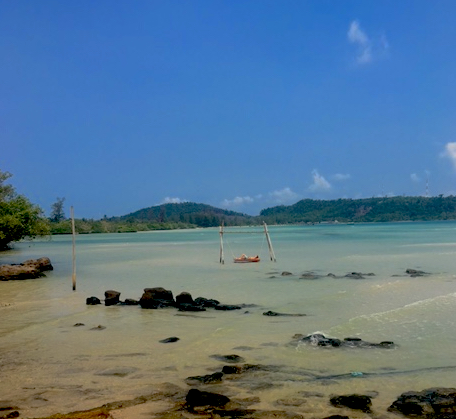
Joseph brought Koh Rong Island to our attention after spotting some pictures of the beaches on the Instagram page owned by a travel guy he follows who mentioned that the seashore here was his favorite in the world.  That’s pretty high praise from an international traveler and photographer, and when Joseph asked if we could come here while we were in Cambodia, we made it happen.  The eighty-square-kilometer island sits in the Bay of Thailand about twenty-five kilometers from the mainland of Cambodia, and we arrived here yesterday after a two-hour ferry ride in some choppy jewel blue sea.  The entire perimeter of the island is a beach, and while it has a few settlements including a small fishing village, it’s been the setting of several international Survivor seasons due to its beauty and remoteness.


Stepping off the dock on to the fine white sand and walking through the coconut trees, we immediately felt like we were on Gilligan's Island, especially since we had all of the things we needed to survive on a remote island after a short boat ride just like the cast of the show.  The smiling staff gave us a welcome drink and escorted us to our cozy bungalow set back in the trees, and it looks just like the one that belonged to Thurston and Lovey Howell.  Along with most Americans, I loved that goofy show, and it was fun to talk about it with the kids who saw most of the episodes in a compilation DVD years ago.


We’re staying in the Palm Beach Bungalows owned by a middle aged couple from the Netherlands. They have a beautiful place on Koh Rong along one of the widest and most picturesque stretches of beach on the island.  There’s a small private island across from our dock with bungalows built over the water and a steady stream of yachts pulling up to the pier.  We’ve been told that it’s an expensive, exclusive place to stay and that many famous people make pilgrimages there, and I bet that Nature Boy Ric Flair or Pee Wee Herman or some other big time celebrity is over there right now.  The main building on our side of the bay is a large, open-air restaurant with colorful lanterns strung between the rafters, a pool table in the corner, and reggae music playing over the sound system which makes me want to stick a chopstick in my eye.  Other than the reggae, the setting is breezy and relaxing, and we spent a nice afternoon walking the beach and enjoying a meal looking out to the sea.


Once the sun set, a staff member lit a huge bonfire in a cinderblock firepit using dry palm fronds, scrap lumber, and kerosene, and the leaves on the branches above the fire were dancing in the heat of the flames.  A British man named Nigel who looks just like Dennis Hopper is a permanent resident here, and his job is to drink gin and tonics and provide evening entertainment with the use of computer-generated backing tracks over which he plays decent solos on a cherry-red Stratocaster.  He half sang, half spoke songs sounding like an English Willie Nelson, and the more gin he consumed, the more he played loud solos on a huge coronet, which I’m sure could be heard back at the mainland twenty-six kilometers away.  He performed next to the pool table, and while Joseph and I played a game, he picked away at an impressive Santana solo while announcing our flubbed shots to the crowd in the restaurant.  I complimented him on his chops when he finished, and he gave me a lopsided grin and a fistbump before signaling to the barkeep for a refill.


Unfortunately, the girls had some stomach distress during the night probably caused by the fish they ate (it’s always the fish), and Deveny wanted to make sure that I included this situation in the blog so others could empathize with the depth of her suffering.  Since I don’t recall any episode of Gilligan’s Island centered around vomiting and explosive diarrhea, I’m not making it much of an issue here.  Suffice it to say that we had a low-key day so they could recover, and we were in a perfect place to relax and let the sea breeze work it’s healing magic.  Deveny set a family record for time spent in a hammock at seven hours, and she managed to contract a rosy sunburn on her legs to go with her tender stomach.  Joseph spent the day in and out of the water, and I followed him around taking pictures of the palm trees behind the lagoons full of blue green water while tiny sand colored crabs skittered away from my approaching feet in the surf.  We played several games of eightball on the regulation table—he’s getting good at billiards and beat me soundly in all but one game.


Deena felt like eating a light lunch, so we ordered some grilled cheese sandwiches, and I practiced some pool shots while we waited for our food.  A French guy took a break from backpacking around the island to have a meal in our restaurant, and he challenged me to a game of pool once he saw my prowess on the table.  He was a nice guy, and I enjoyed talking to him about his travels while we played, and even though we were evenly matched, he beat me by one ball, and I had to suffer defeat at the hands of Pepe le Pew.  After lunch, Deena returned to her hammock, Joseph went back to the ocean, and I prowled the seashore in search of shark teeth until one of the staff members informed me that there are no sharks in the sea around the island due to the warm water.  That little bit of information prompted me to seek out a lounge chair in the shade where I lapsed in and out of a coma caused by the steady, soft breeze rustling the dry palm branches over my head.  


After a dinner of mostly bland food, we’re hoping for an uneventful night under the protective confines of the mosquito netting in our bungalow.  I felt bad for my girls since stomach issues are no fun at all, especially on an incredibly beautiful island off the coast of Cambodia.  We made the best of the situation just like we try to do at home—sometimes family members get sick, even on Gilligan’s Island, and it’s up to the ones that are well to tend to them and cheer them along until the situation improves.  We have a long day of travel tomorrow as we leave Koh Rong Island and head to Phnom Penh, and I’m hoping Deena and Deveny can get through it ok.  We have plenty more beach time scheduled in the next month in some exotic places, so I’m sure we can make up a sick day.


Tuesday, March 7, 2017

Cambodia - Sihanoukville


I haven’t held American money in my travel-weary hands in over seven months, but I’ve become an expert at calculating exchange rates using all types of international currency including British pounds, euros, new Israeli shekels, Thai baht, Jordanian dollars, Egyptian pounds, Turkish lira, and Vietnamese dong.  As we looked ahead to crossing the border from Vietnam into Cambodia, we knew that we would need American dollars to purchase entry visas and initial supplies because the Cambodian economy runs primarily on American currency with their own riels as secondary exchange.  Not just any American dollars either—the Cambodians want crisp, freshly printed bills with no tears, creases, or any other signs of wear.  I’ve poked around the internet a bit to find out why this southeastern Asian country runs on American currency, and I can’t find a straight answer, and now I’m bored with researching it; so the matter will remain a mystery for eternity.


We spent our last two nights in Vietnam in the town of Chau Doc about seventy kilometers from the Cambodian border, and we used our time during the day to figure out the whole border-crossing procedure.  The guy running the desk at the hotel hooked us up with a local transportation hustler who arranged a bus ride to the border town of Ha Tien and taxi transportation to the border itself.  We knew that we would need American dollars to pay for our visas as well as the three-hour taxi ride to Sihanoukville, and in our American way of thinking, we figured we would just mosey on down to one of the multiple exchange offices or a neighborhood bank branch and secure some crispy American greenbacks.  Turns out, the local banks don’t exchange Vietnamese currency for American, and exchange offices in Chau Doc are nonexistent; so our transportation purveyor suggested we find a gold seller in the town market to see if he might have some dollars to sell for a decent rate.  I tossed and turned in bed that night imagining my family stuck in Vietnam begging for American money on the street corners.


The next morning while Deveny slept late, I took Deena and Joseph with me on a stroll around the neighborhood to start looking for a gold seller, and for some reason, we chose to walk a few blocks off the main drag and wound up in front of a mini-mart sporting a large “coffee” sign out front.  Deena remarked that I could come here for coffee later since I hadn’t enjoyed a decent cup in several days, and suddenly an elderly lady appeared out of nowhere and said, “Yes, I have good coffee. You take beautiful family and make sit down here!”  Before we knew what was happening, we were sitting in pink plastic chairs on the sidewalk around a blue plastic table laden with a pot of chilled green tea and tall glasses of rich iced coffee sweetened with condensed milk.  


Our barista’s English was decent, and she asked us about our travels in Vietnam and was pleased to hear that we thought her country was very beautiful.  I mentioned that we were heading to Cambodia and that we needed American dollars and asked if she might know a nearby gold seller.  She gave us a wide smile and said, “I have many American dollars, I sell to you and give you good price.”  We finished our delicious coffee, and while Deena and Joseph went down the street in search of lunch, I kicked off my shoes and entered this lady’s shop and sat on a metal stool in front of her desk while she broke out a calculator and figured up our transaction, stopping occasionally to show me her work.  I bought a fair amount of brand new American bills with most of the remaining Vietnamese currency in my pocket, and it cost only five dollars for the exchange.  I thanked her profusely and promised that we would return later in the day for more coffee.  I caught up with Deena and Joseph, and we proclaimed that due to her excellent coffee, stash of American money, and overall pleasant demeanor, our new Vietnamese friend should be deemed, A Gift From The Lord, since He obviously guided our steps to her shop that morning.


We spent the evening talking about our many adventures in Vietnam, but we turned out the lights at 10:00 since we had a 5:30 wake up the next morning.  The early bedtime would have been a good strategy had I been able to go to sleep, but thoughts of the impending travel and border crossing had me staring at the ceiling well after midnight.  At 6:45, we were packed and standing in the lobby of our hotel when much to our surprise, the transportation hustler himself showed up to help load our bags into the taxi he summoned for us, and he escorted us to the bus station on his motor scooter.  When we pulled into the station, we saw the big orange buses parked out front and thought we had booked a ride on one of the nice buses we had taken a couple times previously, but the taxi kept going right past those luxury machines to the small lot behind the station, where all the forty-year-old rattle traps were parked.  After our gear was stowed on an ancient brown bus, we took our seats, and the hustler bid us goodbye and was pleased to show us how the air conditioning worked by sliding the windows back and forth.


We got underway on time at 7:10, and thanks to the large plastic Buddha sitting in a shrine on the dashboard, our driver was able to quickly exit the city limits of Chau Doc using moves that would have made Darrell Waltrip proud.  Our large orange buses had young attendants who assisted passengers with luggage and made sure everyone got off at the right stop; our attendant on the old brown bus was a thin elderly man with a head full of white hair cropped close and a mouthful of gold teeth.  He smelled like Old Spice aftershave and tobacco, and I know this because he chose me to lean on while he took money from the passengers and checked their ID cards.  There were a couple of guys sitting behind us who chain smoked the whole way—fine with me since the thick fumes kept the mosquitoes circling the passengers at the front of the bus.  


We bounced and shook along the road as we entered the countryside stopping every so often to pick up other passengers at bus stops and to make deliveries of some sort that our elder attendant would chuck out the doors while the bus slowed down slightly.  At one point, we stopped for a woman, her two small children, and an old heavy television that our attendant struggled to bring on board.  Before we shoved off again, he got into a heated argument with the lady about the TV, which I think had to do with the fact he was going to make her purchase an extra seat for this big honkin’ TV, which she was not about to do.  The whole thing resolved with her fanny back on the side of the road along with the kids and the TV.  After that, the main form of entertainment for the passengers came from Joseph as he slept with his head lolling around and his mouth wide open.  Everyone pointed and laughed, and I thought about waking him up to save him some embarrassment, but since our fellow passengers were enjoying themselves so much, I let him sleep.


We followed the river for much of the trip, and even though the journey was only about fifty miles, it took almost three hours to reach Ha Tien due to the many stops, traffic, and poor road conditions.  When we finally reached the border town, we grabbed our stuff, got off the bus, and were greeted almost immediately by a man who was there to arrange our ride to the border.  He also said he “knew some guys” who could provide a car to take us from the border to Sihanoukville for a price that was about double what we had been told to expect.  I left Deena to bargain with him while I took the kids to buy some snacks, and when we returned, she had haggled the price down to a much more acceptable rate.  Our new transportation hustler helped us board a shuttle bus for which we curiously had to wait outside the gates of the station, but we made it to the border in about twenty minutes.


The border area was desolate and looked like a war zone with crumbling buildings, drooping, dust-covered palm trees, and piles of rubbish lining the broken pavement which had the shuttle lurching and bouncing.  We placed our luggage in the trunk of a waiting car and walked through the Vietnamese checkpoint where our passports were run through the computer, then stamped allowing us to exit the Socialist Republic of Vietnam, and enter the Kingdom of Cambodia, where we taught the children how to bribe government officials and look happy while doing it.  It is well known among travelers that the Cambodian border officers charge $35.00 for a $30.00 tourist visa, and unless one has the time to be detained for several hours, one needs to pay the extra five bucks along with the $1.00 fake health fee to ensure a speedy and efficient border crossing.  Flush with an extra $24.00 in their pockets, our chubby and friendly border guards issued us crisp, blue visas with all kinds of official looking stamps, smiled broadly, and wished us pleasant travels...we think.


Our car was waiting outside the doors of the Cambodian facility, and the driver took us over the border to a waiting minivan which was to be our transportation to Sihanoukville.  Somehow all of this stuff gets worked out, and everyone gets paid while the passengers remain hopeful that they will reach their intended destination.  Our new driver was friendly, and he drove smoothly into the countryside, which looked vastly different from Vietnam even though we were only a few kilometers from the border.  The banana trees were gone, and there were only a few palm trees dotting the fields in front of low scrub-covered hills.  We passed through small villages on dirt roads where chickens and dogs ran out into the street, and our driver stopped occasionally to deliver packages to families and a school.  Two hours later, we pulled up in front of the Otres Marina Hotel, paid our driver, and took our packs to cottage number two where our hostess took our orders for free welcome drinks. We enjoyed these libations at the dockside pavilion after eight hours of stressful travel.


Sihanoukville is a small town at the bottom of Cambodia, and it’s a major destination for backpackers due to its beautiful stretches of beach, aquamarine ocean, cheap accommodations, and 25 cent draft beer.  The town used to have a thriving harbor until the Cambodians captured a US cargo ship in 1975, and the Americans responded by bombing the harbor back into the nineteenth century.  The area has rebounded well, and the town is a major destination for tourists even though the main thoroughfare along the beach is a dirt road full of hostels, bars, restaurants, and hovels built with bamboo frames and wrapped with plastic tarps where the locals who serve the tourists call home.  


The Otres Marina is old and run down, but our cottage has comfortable beds with a good air conditioner and a brand new floor fan.  The steps at the back of the property lead down to the small dock covered by a palm thatched roof where we’ve been enjoying our breakfasts for the last few days served up by the friendly staff.  The dock is located on an inlet just off the ocean, and it’s surrounded by thick stands of mangroves with thousands of colorful fish darting around the roots of the trees in the shallow water.  During our most recent meal there, we watched a small crew led by a skinny western-looking guy attempt to perform some restoration work on one of the small barges owned by the marina.  They carried a few boards back and forth, talked a good bit, and smoked a lot of cigarettes before calling it quits around 10:00.  Not bad for a day’s work.  


For the past couple of days, we secured some comfy lounge chairs in front of one of the many restaurants on the beach and spent most of the day in and out of the warm ocean water and enjoyed delicious barbecued chicken and pork for our meals.  Most of the restaurants serve some form of barbecue, and they cook it over charcoal on large grills sending the thick, tantalizing smoke wafting down the beach.  The food is cheap and delicious, and everyone’s in a good mood down on the beach, and we’ve had plenty of time to enjoy our first couple of days in Cambodia.  There’s a nice hotel with a pool next to our place, and Joseph worked up the nerve to see if we could swim there. The guy behind the desk said if we ordered some drinks at the swim-up bar, we could use the pool anytime—not a bad deal in my estimation.  Deena describes Sihanoukville as an old, hippie kind of place, and the laid back atmosphere has helped us recover from busy cities and border crossings.  Tomorrow we board a ferry bound for Koh Rong Island, where we’ll spend a couple of days in a bungalow overlooking the ocean. Then it’s off to the capital city of Phnom Penh as the southeast Asian odyssey continues in Cambodia.


Saturday, March 4, 2017

Vietnam - The Mekong Delta


Since my sixteenth birthday almost thirty-five years ago, I’ve driven numerous cars, trucks, and vans, and in that time, I’ve honked those vehicles’ collective horns maybe twenty times.  The dude that drove the bus from Saigon to Can Tho honked the horn twenty times every thirty seconds, and by the time we arrived in the Mekong Delta, I emerged from the bus thinking, “Ima kill someone.” The Vietnamese honk their horns relentlessly, even more than the inhabitants of the Middle East, and I don’t know that I could ever get used to it.  At home, when someone honks at me for not accelerating a tenth of a second after a signal light has changed or for not turning right on red when I don’t feel like turning right on red dadgummit, I have fantasies of getting out of my car and bashing the windshields of the offending honkers with a crowbar.  The Lord is working on my heart in this area, but in the meantime, the horns of Vietnam have tested me, and thankfully I found refuge from them with my family on the banks of the mighty Mekong.


The day before we left Saigon, Deena and I did some recon work at the bus station while Joseph and Deveny worked on some school stuff, and we managed to purchase advance tickets for passage to Can Tho, one of the major delta cities.  Even though everything was in Vietnamese, we managed to communicate our desire to travel in a southwesterly direction, and the cashier was friendly and helpful as we completed our purchase.  Our last dinner in Saigon was a hearty bowl of beef noodle soup in a streetside cafe served up by a nice lady who was into her soap opera booming from a TV mounted on her food stand.  The Vietnamese are into these sappy programs big time, and they’re so poorly acted, it’s hard to tell if it’s comedy or drama, but I suppose the same could be said for the American soaps.  


We were up early the next day, and Joseph and I ran down the street to score some omelet banh mi for breakfast while the girls got ready, and after a flurry of packing activity, we boarded a taxi for the short ride to the bus station.  Earlier in this trip, we took a lot of buses across Europe, and we always managed to figure out the workings of the terminal and the platform from which our bus was leaving.  Not so in Vietnam as the only sign written in English in the entire station was for the bathroom, and while that was handy, it didn’t help us find our bus as we stood there bewildered with the clock ticking.  


Then out of nowhere, an elderly lady appeared, smiling as she shook our hands and told us in broken English that she had lived in Michigan for eighteen years and that she loved America.  She snatched our tickets and read them, then took Deena by the arm and led us around the bus station until we were seated in the correct waiting room fully educated on how to tell which bus was ours.  She even found a security guard and sternly assigned him to tell us when our bus was pulling into the boarding area.  She gave us hugs and blessed us, and we sat there with our grateful heads spinning.  After she left, a mother and daughter approached us and asked if we needed help, and they also made sure we knew how to read our tickets in order to find the right bus.  Three angel sightings in less than twenty minutes—a new record.


Other than the blaring horn, the bus was comfortable, and three and a half hours later, we pulled into the Can Tho bus station and boarded a taxi that whisked us off to the Nguyen Shack on the banks of the Mekong, just fifteen minutes away.  The Mekong Delta stretches over forty-thousand kilometers at the southwestern tip of Vietnam, and the river spreads out into a huge network of branches, streams, and swamps as it eventually washes into the South China Sea.  This area once belonged to Cambodia until it was annexed by a Vietnamese noble in 1698, and the attempt to reclaim it contributed to the downfall of the Khmer Rouge regime in 1978.  During the Vietnam War, the Viet Cong engaged US forces in heavy fighting during numerous battles made more difficult by the wet conditions.  Due to it’s warm wet climate, the delta produces three rice harvests a year making it one of the world’s top producers of this staple which has over fifteen-hundred varieties in Vietnam alone.  The Mekong Delta has an estimated population of seventeen million people of which eighty percent are involved with some aspect of rice production.


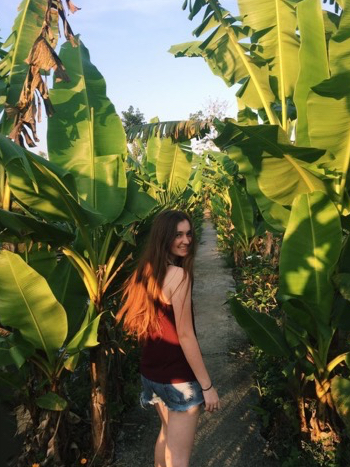
The Nguyen Shack is a unique homestay comprised of a main compound with rows of small dormitories and bungalows connected by a network of paths along the banks of the river.  The guest quarters are reached by crossing the river on a forty-meter long, swinging plank and cable footbridge. We were assigned bungalow number twelve at the end of the path—we felt that we had the river all to ourselves.  The bungalows are fashioned from bamboo slats affixed to exposed rafters and studs made from long, thin tree trunks whittled smooth.  The roofs are thatched with thick bunches of dry palm branches, and the floors are made of six-inch rough-sawn planking weathered gray with small gaps between the boards.  The small porch in front has views of vast green gardens lining multiple canals, and the rear porch is perched on stilts directly over the river with two reclining bamboo chairs and two coma-inducing hammocks placed next to the rails.  The bathroom is built just off the main area with a concrete floor and five-foot bamboo walls which allow a view of the jungle while showering.  The two double beds have large mesh nets tied to the ceiling and stretch to the floor, which offer protection from mosquitoes that are active only for a few hours at night.

On the front porch, those black socks are fixin' to come off


View from the front porch

On the afternoon of our arrival, there was a strong breeze sweeping across the bend in the river, and worn out from travel, we took long naps lulled to sleep by the leathery flap of the leaves in the banana trees surrounding our bungalow.  Later in the afternoon, we enjoyed soft drinks on the rear porch and watched the water level rise with the tide before walking back for dinner at the main compound.  The Nguyen Shack is staffed by an exceptional group of young men and women who have a strong command of the English language and complete understanding of warm, sincere customer service.  The compound was always lively with guests coming and going, steam pouring from the kitchen, and puppies romping around the perimeter.  As we sat down to eat, we watched a small pig run laps in the heavy ground cover of the courtyard between the building and the road stopping occasionally to munch on stalks of lavender flowers.  The food in the restaurant was reasonably priced, and we ate all our meals there during our stay and developed an affinity for the never-ending flow of refreshing lime juice served ice cold in tall clay mugs.

Bananas in the wild

Papaya mama


We arranged to join the bike tour the following morning and walked back across the swinging bridge to the footpath lined with papaya trees full of heavy fruit.  We enjoyed our first sunset in the delta from our rear porch and felt the breeze turn cooler with the onset of evening.  In our section of the Mekong Delta, the twilight air has a spicy scent like freshly sliced ginger, perhaps due to the many varieties of night-blooming flowers opening on vines in the trees and thick clumps of vegetation in the river.  In The Fellowship of the Ring, the hobbit, Samwise, makes the observation, “I thought I heard some soft plashing and a sniffing noise, a while back; but you hear a lot of such queer sounds by a river at night.”  I agreed with Sam as the night came alive with all sorts of sounds from the river and its banks, and we experienced the first onslaught of mosquitos that had us running for the protection of the nets on the beds.  We spent the rest of the evening watching art appreciation videos while the yellow moon rose over the Mekong, and we forgot all about the busy city from which we had just traveled.

Sunset on the back porch


After a hearty breakfast of eggs and French bread, we joined a young couple from New Zealand and struck out on the bike tour guided by Peter and Hui, two delightful young men who were excited to show us the countryside and life along the river.  The sun was bright, and the banana tree leaves were still dripping with moisture from the night before as we biked along in the warm and humid air already receiving waves and smiles from the villagers we passed.  We kept a slow pace, which was fine with us since we hadn’t ridden bikes since October in Italy. We made frequent stops beginning with the nearby elementary school where we could hear the children enthusiastically reciting their lessons in unison while Peter told us about education in Vietnam.  


The current situation among natives, especially in the countryside, is that only the rich can afford a good education at a university; so one must learn English early in order to land a higher paying job to finance higher learning.  Peter said that the poor people in the delta live together in big families and work the rice fields to survive and work at odd jobs between harvests to make extra money.  We paid a visit to the village blacksmith, who farms during the seasons and during his short breaks, makes razor-sharp machetes and curved knives for the other villagers to assist them during the harvests.  We left the smoky tang of the blacksmith’s shop and biked down the road a short distance to the local distillery where the owner produces government sanctioned one-hundred-proof rice wine that packs a real wallop.  His still is set up much like one run by a moonshiner in the mountains of North Carolina, and by law, he can sell his rice squeezin’s only to the local population of men since drinking and smoking women are frowned upon in Vietnamese society.  The distiller also raises pigs for the benefit of the community, and these little porkers were eager to greet their western visitors.

Blacksmith


The still


Village street

The Buddhist pagoda, the longest stop of the morning where we were served vegetable soup with noodles and and played with Tee Tee, a beautiful little girl who is one of the orphans living there under the care of the monks and nuns.  It is common for Vietnamese women who have children outside of marriage to leave their newborn babies at a monastery in order to avoid rejection by their families.  The monks and nuns care for the children until they reach the age of eighteen, when they are given the choice between going out into society or becoming a monk or nun, and the majority of them choose service to the temple.  We learned that in many cases, the orphans are adopted by families in other countries, and a family from Serbia is hoping to adopt Tee Tee in the near future.  She gave us all kisses as we bid farewell to the monks and thanked them for their kindness.

Pagoda shrine


Deveny and Tee Tee

Joseph and Tee Tee

During the last hour of the tour, we stopped at a rice factory, a traditional doctor’s office, and a pottery maker’s shop where we learned all about the particulars of these trades and how they are woven deeply into the workings of the community along the river.  As Peter and Hui talked about modern life in the village, I was reminded of tales of life in rural America before the industrial boom when families survived hard times with the support of the local community. After four hours biking in the heat of the morning, we were all tired and sweaty and ready to head back to the Nguyen Shack; so we left the riverside and rode back down the main highway—a little hairy at times, but this route took us to mugs of ice cold lime juice in the quickest fashion.  In the courtyard there sat an old skiff repurposed as a home for a large school of garra rufa fish, also known as doctor fish, that provided free fish pedicures for the Shack guests.  The little fish swarm around the feet and nibble off dead skin leaving one’s tootsies feeling fresh and soft provided one can stand the procedure.  We witnessed this spectacle in Thailand as grown men screamed like little girls while their wives forced them to keep their ticklish feet in the tank until they could snap a Facebook-worthy picture.  We all managed to to try it, and I ended up liking it so much that I went back several more times during our stay.

Rice factory

The doctor's herb supply

Fish pedicure

We spent the afternoon after our bike ride on the rear porch of our bungalow reading and dozing until the shadows grew long and the tide pushed the level of the river high up the bank.  The sun looked like a distended glob of molten orange glass as it dripped slowly out of the clouds into the jungle, and we were treated to a spectacular sunset unlike any we had witnessed since our time on Santorini.  At the compound, we had a delicious dinner of fried spring rolls and pork with vegetables before walking the papaya-lined path back to our bungalow where we were much better prepared for the mosquitoes and enjoyed a longer evening on the porch watching the moon and stars gather intensity in a dark purple sky.


We signed Joseph and Deveny up for a cooking class on our last day on the banks of the Mekong, and they did a great job preparing several dishes under the cheerful tutelage of one of the resident chefs.  Deena took notes on the recipes as they sliced, diced, and sauteed, and I sat nearby and drank lime juice and edited pictures until the dishes were cooked to full flavor and served as our luncheon.  After more afternoon porch time, we boarded a skiff with several other guests and pushed off the dock into the depths of the Mekong for the sunset river tour.  The boat was captained by a small man whose skin looked like dark brown leather from years spent in the sun. We maneuvered against the current by the power of a Honda pressure-washer engine turning a small propeller at the end of a two-meter shaft—the Vietnamese version of the outboard motor.  

Cooking class

We spent two hours exploring branches of the main river passing small houses, boat docks, and large, half-sunken vessels slowly filling with red river sand.  We received many friendly waves from local moms and dads giving their kids an evening bath in the river attesting to the fact that most houses had no running water, but glancing through screened doors, we did witness the glare of a few flat screen TVs mounted on cinder block walls.  The sun set just as we returned to the Nguyen Shack and had another delicious supper before taking one last night walk back to the bungalow, where our well-practiced mosquito procedures left us bite-free for the evening.


I got up early on our last morning and spent some time by myself on the rear porch and reflected on our restful time on the river while I listened to the wind swish through the bamboo leaves and rustle the dry palm branches.  As I drank my coffee, I was treated to the sight of two older women piloting a small skiff through the vegetation floating along the bank.  I watched in surprise as the lady in the rear of the boat gave a sudden strong burst with the oars sending the front of the boat sliding up the bank as the lady in the front grabbed onto the thick stalk of a banana tree.  She pulled a wicked curved knife from the front of her shirt and sliced the purple, football-sized flower from the end of a stalk of bananas and chucked it into a pile of harvested flowers on the floor of the boat.  She pushed off from the bank, and they waved and gave me toothless grins as they headed downstream in search of more flowers.


As the rest of the crew got up, we silently showered and packed our things knowing that we had to leave this special place.  There was a four-hour bus ride ahead of us since we planned to spend our last two days in the city of Chau Doc before crossing the border into Cambodia.  It’s hard to believe that we’ve spent a month in this amazing country, and the time has flown by for all of us.  We walked over the bamboo bridge from our bungalow to the path and enjoyed the stroll along the lush canal one last time. We finished a quick breakfast just as our taxi pulled up to take us back to the bus station.  We said our goodbyes to the wonderful staff and left the Nguyen Shack rested, refreshed, and flush with the knowledge that the majority of the earth’s beauty is contained along the banks of rivers and streams all over the world, especially those of the Mekong Delta in southwest Vietnam.