Monday, October 3, 2016

Packing for a Trip Around the World

While we’re staying in places for longer periods of time, I’m hoping to use the extra hours to write about some of the many details surrounding a trip around the world.  One of the questions I heard most from people once they had found out about our excursion was, “How in the world are you going to pack for something like that?”  The ratio between the time it took to create a packing list and the amount of items we ended up taking is very uneven, but so far, the research has paid off.  My family has invested a lot of time over the years camping, backpacking, and taking major trips to national parks and other areas of interest across the fruited plain.  Through all those trips, one of the major themes has been packing light so that we can move quickly and not be burdened with excess baggage full of items that never get used.  


People tend to operate under the pretense that it’s better to have something and not need it than to need something and not have it.  Fear of the unknown and the desire to recreate the lifestyle at home while on the road drives the packing process for many. Thinking like that can lead to misery and disorganization on the trail and on the road, and when it comes down to it, one can get by comfortably on an adventure with very little in tow.  With all that said, here’s my packing list for this trip with a brief explanation of the thought process behind the inclusion of the items:


Luggage - Osprey Farpoint 40.  I'm a big fan of the Osprey company because their products are well designed and made to last.  I’ve used an Osprey Aether 70-liter internal-frame pack for many backpacking excursions.  The Farpoint 40 liter bag conforms to all airline carry-on restrictions so it doesn’t have to be checked—saving a lot of time and money.  The bag can be carried as a suitcase or converted to a backpack with shoulder straps, hip straps, chest strap, and load lifters.  It has straps inside for compressing clothing and outside for compressing the whole bag once it’s packed.  There is an interior sleeve for a laptop as well as easy-to-access pockets for documents and chargers—I love it.  Joseph and Deveny are carrying Farpoint 40s as well, while Deena is packing one of our trusty carry-on suitcases also with a 40-liter capacity.


Base layer - synthetic long underwear—top and bottom can be used for sleeping or layering in colder temperatures.


Underwear - three pairs of synthetic boxer briefs made by Uniqlo—lightweight, breathable, and the silkiest, most comfortable underwear I’ve ever worn.


Socks - three pairs of Nike dri-fit crew socks.  These socks are a synthetic/cotton blend, which makes them a little more slow-drying than the rest of my clothing, but they are the most comfortable socks in the world, and since they’re black, they can used for dress or casual occasions.


Short-sleeved shirts - three synthetic t-shirts, blue, gray, and red, purchased at Walmart for five dollars each.


Long-sleeved shirt - my trusty slate blue synthetic Eddie Bauer hiking shirt purchased on Ebay for fifteen bucks.


Pants - synthetic khaki zip-off hiking pants, can be used for dress or casual wear.  I started this trip with two pairs of pants, but threw the older one away after determining it was unnecessary.


Shorts - two pairs synthetic khaki shorts by Columbia, another one of my favorite manufacturers.  One pair has a mesh liner so it can double as a bathing suit.


Shoes - one pair of low-rise Eddie Bauer trail hikers, thirty dollars on Ebay, dress or casual, very comfortable walking shoes.


Outerwear - one lightweight raincoat and a down jacket that packs to the size of a grapefruit.  Synthetic stocking cap and a lightweight pair of gloves.


Microfiber camp towel - we don’t have room to pack fluffy cotton towels, so each of us have one of these microfiber towels in our bags.  They pack down to the size of of a handkerchief, and while not as luxurious as a full sized towel, they get the job done.  So far, we’ve stayed in two places where we needed them, and we lived to tell the tale.


Toiletries - I have a small toiletry bag in which I pack a toothbrush, dental floss, razor, and fifteen spare razor blades which should easily last the remainder of the trip.


That’s it for the clothing and individual toiletries in my bag—three days worth of clothes with pants and a long-sleeved shirt to wear for church and cooler weather.  


Now, I’m sure you’re wondering how we’ve been able to do laundry every three days to maintain an optimum level of freshness.  Here’s a little secret:  one can wear the same clothes for multiple days and not die—hard to believe, but it’s true.  We do laundry once a week and sometimes wash items in the sink.  There are no dryers; so we hang everything on racks or a length of paracord to dry overnight, and because everything is synthetic, drying within a two-three hour period is guaranteed.  Synthetic clothing is very lightweight, comfortable, breathable, packs down very small with no wrinkling, and can be layered easily for cold weather.  The rest of my family members are packing in a similar fashion, and the girls have a few additional items particular to females.  Joseph and I have a bit of extra room in our bags used to carry crew gear which is described below:


Bible - one shouldn’t leave home without one’s sword.


Nook - small tablet which takes the place of many heavy books, and my special edition Lord of the Rings set is stored in the memory.  We might have been able to work out reading on the laptop, but I prefer reading on the Nook, and it takes up very little space.


Two iphones - these contain most of our travel information and contacts, and the kids claim about 99.9% possession of them.  They use them to document our trip with pictures and to keep up with their friends through about 100 social media outlets.  Given the choice between keeping their phones or keeping their clothes, they would take the phones immediately without considering the consequences of traveling unadorned.


Two textbooks - Joseph unfortunately has to lug two paperback textbooks around, but there were no American literature or American history books that we liked available in digital form.


Liquids - all of our travel-size toothpaste, deodorant, shampoo, contact solution, shaving cream,etc.  These items are broken down into four quart-sized ziploc freezer bags ready for inspection by airport security.


Two REI Flash 18 daypacks - these packs are an absolute necessity as we use them in our local travels every day and during the long hauls for carrying our liquid bags.  Due to their bright orange color, they also immediately reveal our status as tourists to the local population.


Full length Inflatable sleeping pad - the type used for backpacking, necessary for the times when we have just three beds and someone gets the floor - usually Joseph.  Packs to the size of a Nalgene bottle.


Two 32-degree-down sleeping bags - These are mummy-style bags that are lightweight, warm, and pack down to the size of a small nerf football.  It was a stretch to bring two of these, but we’ve already used them several times, and we’re glad we made room for them.


Two liter-sized Nalgene water bottles - these go with us everywhere in the daypacks and provide just the right amount of water to get through a day of sightseeing.


Three 11 inch laptop computers - the kids do schoolwork on theirs, and we do research, writing, and communication on ours.


Two small electric adapter boxes - all of our electronics are dual voltage, so there is no need for convertors, but the adapters are necessary for the different plug configurations.


Pens, paper, headlamp, clothesline, portable charger - all fits in one daypack zipper pocket


Medicines - in addition to first aid type medications such as Aleve and Tums tablets, Deena and I have a ten-month supply of our prescribed medications. They take up a lot of room, but what can we do?  All the bottles are kept in two gallon-sized ziploc freezer bags.  The method used for obtaining ten months worth of prescription medication will be included in a future blog post.


Passports and travel documents - Deena keeps these in a small shoulder bag along with flash drives and quick need items like sunglasses and chapstick.


That’s pretty much it.  Everything we’re packing fits into four carry on sized bags with the addition of a couple of small daypacks allowed by all airlines except for the diabolical EasyJet, and I’ve shown in earlier posts how we defeated them.  So far, our system is working well—we’re organized, comfortable, and unburdened by unnecessary items.  By packing light, we can get ready quickly, carry our luggage with little discomfort, and get through airports with relative ease.  We’re saving an average of 120 dollars per flight by not checking bags, and we’re already on our way to our destination while others are still waiting at baggage claim.

All my stuff and the Osprey Farppoint 40

All packed up and ready for a DEA bust

The Osprey Farpoint 40
Well-designed, comfortable,
and doesn't make my butt look big

Sunday, October 2, 2016

Poland - Krakow

I counted three nuclear power plants on the way from Prague to Krakow, and there could have been more; those were just the ones visible from the bus window.  One of them was so close to the highway that I could see color variations in the thick clots of steam churning from the top of the reactor towers.  I know we have these power plants in the US, but they’re generally hidden for our convenience and peace of mind, and activists are less likely to protest in the middle of the woods.  At least in Poland, I now have the assurance that there should be plenty of power available to fire up the hot pot and keep our phones and laptops charged to capacity.  I also noted that there was a huge water treatment plant within a few miles of the power plant closest to Krakow, so I’ll be turning out the light every time I fetch some water from the tap to see if it glows.


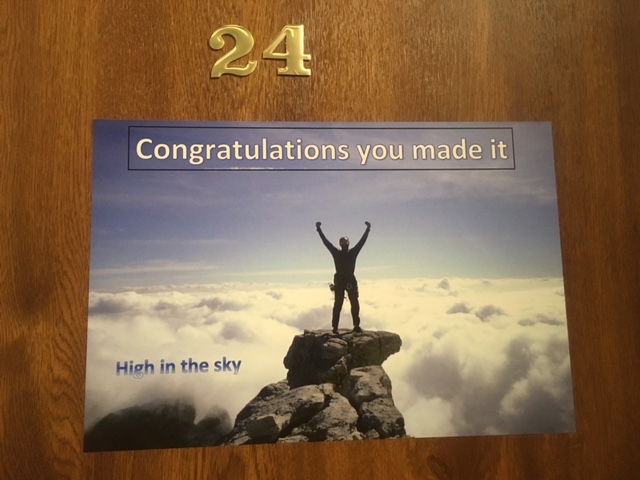
Reaching the balcony level of the Cape Hatteras lighthouse requires climbing 257 steps. The top of the south tower in the Notre Dame cathedral takes 387.  To conquer the summit of the Montmartre hill and reach the basilica of Sacre Coeur, one must climb 270 steps; there is a funicular nearby for the cardiovascularly challenged.  Reaching our apartment in Krakow, which I’ve nicknamed The Eyrie, requires climbing an entire stairwell of exactly 100 steps, and so far, I can’t find a funicular anywhere.  Our host, Andre, assures us that Krakow is a walking city and that we can reach all major attractions on foot and save lots of money by foregoing public transport—by the time we leave Krakow, we should be able to give Usain Bolt a run for his money.

The sign on our front door...seriously

The studio-style apartment consists of one large room with a sofa on a platform that converts to a double bed, while a double trundle bed pulls out from under the platform.  There is a small kitchen along the edge of the platform, and a decent sized bathroom is located off the entry hall.  The space is a little tighter than the one we had in Prague, but there is still adequate room to spread out a bit.  Our one window opens to the courtyard below, which isn’t visible from our perch, but due to extensive building renovations, we’re able to watch construction workers performing their trades on scaffolding directly across from us, and occasionally a pigeon lights on our balcony to make sure we’re ok.


We arrived at our apartment about 7:00 on Friday night hungry and "stove up" from sitting in a bus all day; so we quickly tossed our gear and ventured out into the neighborhood in search of a grocery store.  We found one a short distance away and between the four of us, we were able to find enough food for dinner and breakfast by looking at the pictures on the packaging labels.  The Polish language is very similar to the Czech language in that it's just as unintelligible with a few extra characters and symbols thrown in to keep the tourists guessing.  A few blocks and 100 steps later, we were back in the apartment in good spirits, cooking dinner, and booking a walking tour for the next day—Krakow, here we come.


There is a large fan in our apartment, and the air circulation and sound it provided served as a sedative for the whole crew last night, and we slept hard for ten hours.  I got up first and wrote for a while before making a big breakfast of eggs-in-a-basket, bananas, and yogurt.  I’m sad to report that I’m back on instant coffee—pray for me.  Our walking tour was scheduled for 2:00, so the kids had plenty of time to do some schoolwork done while Deena and I continued our research on Krakow and booked bus tickets to Budapest for later next week.  After a quick trip to the grocery store, 100 steps, and lunch we were off to the Old Market Square to meet our guide for the afternoon.  We had only about a mile to walk, but it was warm and humid, and we were panting by the time we reached the square.


For 1,100 years the Market Square has been the center of the action in the Old Town section of Krakow and today was no exception.  Outdoor cafes, which line the edges of the square, were busy with customers enjoying heaping plates of food and tall glasses of beer.  Vendors were set up in the middle of the square selling everything from psychedelic lollipops to fur coats.  We arrived with a few minutes to spare before our tour, and we enjoyed checking out the merchants’ stalls while dodging other shoppers, some carrying plates of steaming sausages and roasted potatoes.  We met our guide on the steps of Saint Mary’s Cathedral and began our walking tour promptly at 2:00 with a fairly large group of about thirty people.  We spent the next two hours checking out the highlights of the Old Town, including the medieval walls, university campus, and the venerable Wawel Castle overlooking the Vistula River. Our guide was engaging as she told us many historic facts and entertaining legends from the long history of Krakow.  My favorite story was about Pope John Paul II, and our guide passionately shared her perspective of the rise of Poland’s most influential son. She called his election as Pope a “miracle” since the all Popes for the last 455 years were Italian.  John Paul lived in Krakow for many years, and after he was elected as the Pope he returned to the city in 1979, a visit most people in Poland regard as the catalyst for the downfall of the communist government in the country.  The citizens also feel like John Paul’s rise to the papacy ended Poland's isolation from the world and finally made their country relevant in the 20th century.

The Grounds of Wawel Castle

Old Town

The Pope slept here...

We covered a lot of ground during the tour and cupcakes were certainly in order after we bid our group farewell. We enjoyed the late afternoon snack before heading back to our neighborhood.  One mile and 100 steps later, we had burned off the cupcake calories and made it back to the eyrie where we cooked a supper of Polish sausages and pierogies and talked about everything we learned about Krakow during our excellent walking tour.  Poland is another place that I grew up thinking I would never visit; yet here I am with my family ready for another day of exploring.


They tasted as good as they look


Saturday, October 1, 2016

Czeching Out

We’ve been in Prague long enough now that I’ve started to pick up on the language, and I feel I could survive here for a while with these words in my Czech vocabulary arsenal:  cigarety, alkohol, toalety, policie, telefony, and notebooky.  How’s that for an aspiring linguist?  Unfortunately, I won’t get to practice my new words since we left the grand old city of Prague this morning, and we’re now headed to Krakow, Poland, on a seven-hour PolzkiBus ride.  Unlike our last bus ride from Berlin to Prague, the coach has no movie player installed on the seats, but they do have free wifi—it just doesn’t work, and judging from the high-pitched beep I’m hearing every five minutes, the smoke detector in the toalety needs replacing.  So, we’ll settle in for a drive through the eastern European countryside and reflect on our time in the Czech Republic.


We kept our agenda for the last full day in Prague light and eased up on the kids a bit with their schoolwork since they had worked hard each day to get ahead in their studies.  Their only assignment on this day was to write a brief blog post on any aspect of our trip so far.  Deena and I used the morning to relax, read, and do a little research on our upcoming destinations.  We had a late lunch of ham and cheese baguette sandwiches, chips, and apples, and then decided to wrap up our afternoon with a relaxing visit to the Museum of Communism right off Wenceslas Square, the site of the Velvet Revolution twenty-seven years ago.  


The museum is located on the second floor of a building that houses a casino on the first floor with a McDonalds right next door—that’s enough capitalism to make Lenin sit straight up in his crystal sarcophagus.  A lady we met at church last Sunday recommend this place to us as an inexpensive, informative way to spend a couple hours, and that was a good tip—we learned a lot more about communism and the history of the Czech Republic.  A tourist brochure we read when we first arrived in Prague had a section on living with the locals, and one of the bullet points mentioned that the Czech people complain about everything all the time:  the weather, the streets, their work, each other—I had to check the front of the brochure again to make sure it didn’t say “Americans." After strolling the halls of the Museum of Communism in the former Czechoslovakia, I honestly don’t see how the Czech people have anything to complain about these days.  The communist party line was pushed to the extreme in this country, and if one didn’t tow it, one was taken away, interrogated, whupped with a big stick, and sent to a camp where there were no water slides or tacos for dinner.  Once again, I found the examples of propaganda to be the most interesting exhibits, and the posters depicting socialist realism were the creepiest I’ve seen yet.  The kids thought it was interesting and unusual to see the United States portrayed as an evil enemy in a lot of the artwork.  Our visit culminated in a viewing of the museum’s excellent short film that showed the demonstrations surrounding the Velvet Revolution through the use of actual news footage.  Parts of the film were disturbing as we watched the military and plainclothes policemen savagely beat citizens, including women and the photographers themselves, in an attempt to quell the demonstrations that would eventually lead to the government transfer of power in 1989.

It's my communist party and I'll fake smile if I want to

A Big Pile o' Communism


We enjoyed coffee and apricot sundaes in the outdoor seating area of the next door McDonalds, and after our tour of the Museum of Communism, this fun diversion seemed a miracle in a city and country that has experienced so much crushing oppression.  The global events of the last one hundred years are complex and intricately connected and difficult for even the most astute historian to follow, especially from a book.  At each point in our journey so far, Deena and I have engaged the children in a time of review to place the history of events in each city and country in context with the history of world events in the twentieth century —we try to include ice cream in this time to encourage maximum cooperation.  In the process, we’re all starting to visualize a unique timeline that doesn’t follow a straight plane, but undulates with waves of human triumphs and tragedies over the last century.  The study of history always shows these peaks and valleys like the printout from a seismograph, but the lines are closer together and more static from recent decades.


The Old Town Square drew us back one last time, and we arrived just as the astronomical clock celebrated the top of another hour in the city we’ve come to love in the last nine days.  We had plenty of time to explore the many aspects of Prague that until twenty-five years ago, were hidden from most of the world.  Our neighborhood streets became familiar and comfortable as we walked to the grocery stores and tram stops, and we eased into a low-pressure routine after many weeks of more intense travel.  The citizens here may complain a lot, but they’re well aware of the attributes of their city, as evidenced by the attention to detail and decoration of even the most recently built structures.  I will miss the scrolled frieze work and pastel facades of the buildings along the Moldau, and no matter where we roam, I’ll always look up over every door casing hoping to see a smiling stone sculpture welcoming me in the manner of Prague as I cross another threshold.

Friday, September 30, 2016

September budget and some travel budget tips

Hello everyone!  Deena here, and it’s time again for a budget update for the month of September.  I am happy  to report we came in around $133 for an average daily spend, and this includes lodging, meals, transportation, and entertainment for all four of us.  I am extremely pleased with this number as we were in some expensive countries this past month.  We covered France, Spain, the Netherlands, Germany, and the Czech Republic—we went way over budget in the Netherlands but only spent 2 days there.  The Czech Republic was very inexpensive and helped lower the number toward the end of the month.  

As I write this post, we are currently on our way to Poland where we will stay for 9 days.  After Poland, we will be in Budapest, Hungary, for another 7 days.   Both of these countries have similar economies and are known for a lower cost of living.  The rest of the month will be spent in Italy.   I’m still not sure how Italy will shake out as far as cost, but I have been proactive and lowered our lodging significantly.   Remember the Barclay Arrival card that Michael opened to lower our AirBnB costs in London?   Well, I opened one as well before we left for the trip, and we had another $500 to use toward travel expenses.  We are in Italy for 23 days, and our original lodging prices were between $30 and $72.  A total for 23 days came to $1,328, and I was able to lower that cost by applying the $500 from the Barclay Arrival card, and our daily lodging average will drop to $36 per night.  This lodging number puts us in a good position to stay at or under budget again for October.  Fingers crossed.

We hopped around a good bit this month, and I wanted to review the prices of the flights we took during September.  We are using low budget airlines that can be found on Skyscanner.  This is the flight search I use for EVERY flight.  They are awesome and list all the budget airlines not always found on Kayak, another popular travel search site.

France to Barcelona on RyanAir:  $20 per person
Barcelona to Amsterdam on Vueling:  $56 per person
Amsterdam to Berlin on EasyJet:  $41 per person

Berlin to Prague was by bus for $20 per person

As you can see, traveling around Europe is very inexpensive if you fly or take the bus.  We are on the Polski bus right now heading to Krakow for $12 per person.

Another tip I’d like to mention is our method of renting cars.  I have been using Autoslash and so far, I love it.  You make the reservation with them, and if a lower rate becomes available, they will contact you with the option to accept the lower rate if you want to change rental companies.  For instance, I rented a car for Ireland and the original price with Avis was $331 for 8 days.  Several days later, I got an email from Autoslash informing me that I could switch to Budget for a rental of $150 for those same days.  Well,  duh..”Yes” was my answer.  Last night I rented a car for our upcoming trip to Greece for $266 for 8 days, and this morning I had an email saying they could lower it to $160; so of course, I accepted.   

Here’s one more tip for those of you who are planning to go overseas for an extended period:  get a Charles Schwab checking account.  They will refund your ATM withdrawal fees at the end of each month.  Those fees can add up quickly, and it’s nice to have that money coming back to you.  We also don’t have to worry about exchanging money as our withdrawls are in the correct currency for the country we are in.  If you are using a credit card while overseas, be sure you have one that doesn’t charge foreign exchange fees.  There are several credit cards that do not have those fees including the Barclay Arrival card that we primarily use.

Thursday, September 29, 2016

Joseph

Joseph here, and I am in the midst of what seems like an impossible dream. I never imagined going on a trip like this. Too expensive, too much work, too crazy of an idea.  Ten months?  That’s too much time away from home, the people I love, and the things I love doing.  I absolutely despised the idea when they first told me three years ago, but I eventually grew out of it when I realized how school is so stressful. In order to plan something like this journey, one must be a bit crazy, and my parents are just that!

As soon as we packed the car and drove away, I missed home. My friends and family have been on my mind ever since I said goodbye to them, and it hurts to know I have eight months left away from them. Hopefully, it will be totally worth the experience, and I will continue to learn amazing things about this world and my life.

Ireland, England, France, Spain, The Netherlands, Germany, and the Czech Republic.  These are all places we have been so far in a month and a half.  If I were to assemble a top three, I would have to go with: 3. France 2. Czech Republic 1. Spain.  France is great because of  Paris and Normandy.  Paris had so much history, and going up on the Eiffel Tower is one of the best moments of my life.  Normandy was a very powerful place. I have learned about D-Day in school and have seen movies about it, but being there was something I’ll always cherish.  I was standing on the beach where thousands of Americans died in a horrible manner to protect our freedom.  Prague in the Czech Republic is so cool to me because it is well preserved and unaffected by bombs from wars. It's like walking through a town in the medieval times with its old buildings and old decorations.  Spain was my favorite because of the beach and how cool a city Barcelona is.  It is like a bigger South Beach, but with less restrictions on women’s clothing......But I have loved every place we’ve been and can’t wait to see more.

I am happy to dodge the stresses of junior year in high school and instead I’m living my friends’ dreams.  After a while I have really missed the perks of America like air conditioning, refills on drinks, time with friends and family, and snacking. I miss my TV at home, and I especially miss watching Panther games.  But I have true friends that realize my struggle and know I have cheap parents that won’t buy a TV package, so they FaceTime me the games. Yes, I know it is desperate, but they are willing to do it—amazing.  Otherwise, I have had a great time making unforgettable memories with my family.  I can’t wait to make more and see incredible things. 

Deveny


Hello, this is Dev. I wanted to talk about things in the trip that my dad hasn't mentioned yet:   things like how we all get along, how I communicate with my friends, my teeny tiny backpack that is supposed to hold my entire wardrobe (still not okay with that, Mom and Dad) and what it’s like to travel the world at fourteen.

Okay, so let's start with what it’s like to live with your parents and moody brother for ten months. You have to understand living with your family at home and on the road are two completely different things.  Not saying it's all bad, but it does have its cons at times.  Now I love my brother dearly, but finding his socks on my bed...and in the bathroom..and on the couch does test me a bit.  Being on the road and living in an airbnb doesn't guarantee you your own room, which is difficult after a long day and you just want your own space, but it's all worth it in the end.

I stay connected with my friends through snapchat and instagram.  It's definitely not the same as being with them and hearing their stories about the awful thing we call high school, but it does the job okay.  I wish I could've taken them with me, and whenever I'm out wandering the streets of some foreign country, I often see things that so and so would love or things that so and so would really get a kick out of.  I have to keep reminding myself that this isn't a permanent thing, and before I know it I'll be back in a classroom wishing I were here again, but until then, my friends and I make these...we’re weird, give us a break.


And now the dreaded backpack.  Right now my wardrobe consists of four shirts, two pairs of shorts, one pair of pants, and two dresses. We try to keep it as simple and light as possible, and whenever I buy something I throw something away to make room in the backpack.  You don't know how much it pains me to walk into a pretty boutique in Paris and not go crazy and buy everything. But I have been making plans to come back one day and buy so much stuff I'll have to check a bag at the airport (the horror). Living out of a suitcase does get cumbersome at times, but I try to make the best out of it, and just think, I never have to clean out my closet!.

All in all, I think traveling is the best thing since sliced bread, and anyone who says differently obviously hasn't met my mom and dad.  Travel as much as possible.  I think almost anyone would rather travel the world then go through freshman year in high school. Okay, I think that's all I have to say...for now.
.
#getdevabiggerbag2016 

Wednesday, September 28, 2016

Vysehrad

The 1,100-year-old fort of Vysehrad sits about 700 feet above the busy streets of Prague. We determined it was a little over a mile from the flat, so our intrepid group set off for a close-to-home expedition.  Up to this point in our visit to the Czech Republic, we’ve used the cheap, reliable public transportation to get around, but today we wanted to get a better feel for the streets around the neighborhood, so we hoofed it using an oft-folded tourist map as our guide.  The blessings of beautiful weather have been bestowed upon us since we’ve been in Prague, and another generous portion was given to us this day.  High soft clouds barely smudged the canopy of deep blue sky. Walking under the sun’s rays provided cozy warmth but strolling in the shade of the tall buildings gave a slight chill for which a light jacket was the perfect remedy.


The streets in Prague commonly change names every couple of blocks, so we had to keep consulting the map to make sure we were on the right track to the fort, but we had the luxury of time and nowhere else in the world to be on a nice afternoon.  Somehow we got a bit off track and ended up walking some of the way on a trail through a park that ran parallel to the main street, a bit of serendipity that we didn't mind.  As we got closer to Vysehrad, we could see the towering ramparts of the old fort in the near distance, and our heartbeats quickened as the street began to rise.  There are camps of historians that contend Vysehrad was the original settlement of Prague while others maintain that the city emerged from the area around the castle on the other side of the river.  Details get a little hazy after 1,100 years, so maybe all the smart guys can settle things with an arm-wrestling match.


The grounds of Vysehrad occupy the entire ninety-acre hilltop beside the Vltava river, and the majority of the area has been converted to a park that includes a walking path around the perimeter of the ramparts.  The old basilica of St. Peter and St. Paul with its twin spires sits at the back of the grounds right beside the historic cemetery that holds the graves of many Czech natives dear to the people such as Bedrich Smetana and Antonin Dvorak.  The cemetery was completely engaging, and we spent the better part of an hour walking among the graves.  Deveny particularly enjoyed our time here as many of the markers were individual works of art with sculpture vignettes and busts of the departed presiding over the graves.  She asked if we could return to the cemetery at night, and I offered some lame excuse that the park would surely close before nightfall, disguising my fear of sitting in an ancient eastern European cemetery in the dark when the vampires come out.  We found the resting place of Bedrich Smetana, the world-renowned composer of "The Moldau", and took several pictures of the obelisks marking his grave.  The two flanking obelisks are affixed with plaques engraved with a run of notes on a single measure of music, and I purposed to find their origin later that evening.


Basilica

Smetana's Grave


All Along the Watchtower

After walking the grounds of the basilica for a while, we spent the rest of our time at Vysehrad walking the ramparts and taking in the lofty views of Prague from a perspective we hadn’t yet seen, eventually resting for a while on benches and talking about our adventures so far.  By the time we were ready to leave, the shadows from the chestnut trees were long on the grassy lawns. We began our descent from Vysehrad headed to a coffee shop we had noted on the way up.  Anna, the cheerful proprietor of the shop, enjoyed using her English skills to describe the goods on display that she had baked earlier in the day.  We enjoyed raspberry cheesecake, pumpkin bread, and cranberry muffins while sitting on a comfy sofa near a window looking out to the street.  Petr, the barista, made a cafe americano for me, and I watched with admiration as he perfectly pressed fresh grounds into a cup of steaming espresso.  At the table I added hot water and sugar to the cup and entered a dreamscape that can only be understood by lovers of this most excellent hot beverage.


We stopped in a few shops on our way back to the flat taking our time, pleased with our decision to stay in the neighborhood today and cooked up a big spaghetti supper when we got back home.  Later I spent some time researching the bar of music from Smetana’s grave, and I was dismayed by the absence of information.  I had my suspicions though, so I pulled up the score of "The Moldau" and compared the notes from the first measure to the one on the grave marker—a perfect match.  The piece opens with flutes playing to create images of the flowing Vltava, and I liked that one of the Czech Republic’s favorite sons now rests overlooking the river he portrayed so beautifully in music.